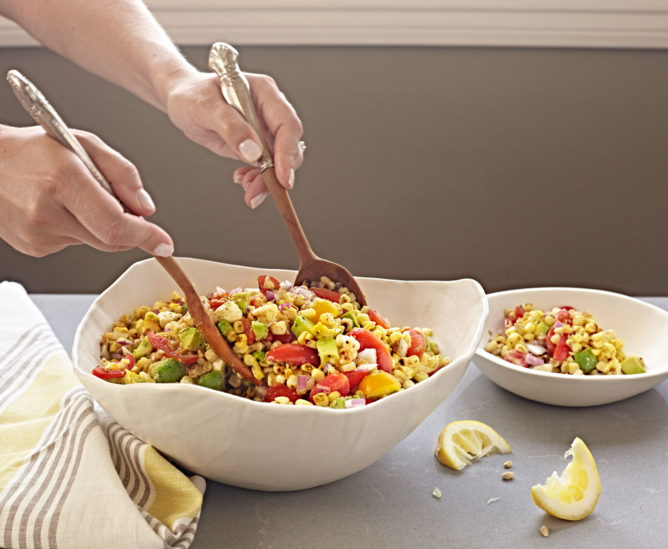
Just Keep Tossing The Salad: Blind Survival Skills in a Bustling Holiday Kitchen

I come from a large extended family. I am one of 4 children and my mom is the oldest of 9, so warm bodies have never been sparse on the holidays, even after half the fam moved to the Northwest. And my husband’s family, though initially smaller, has grown exponentially the past few years, both with new littles and adopted extended members, so no shortage there either. I also come from families of doers and helpers on both sides— everyone pitches in by bringing a dish to pass, assists with food prep before the meal and form s a cleaning assembly line of sorts afterwards. Continue reading “Just Keep Tossing The Salad: Blind Survival Skills in a Bustling Holiday Kitchen”

How Hiring a Qualified Person with a Disability Serves Everyone

Disabled_JoyThomas

OCTOBER IS NATIONAL DISABILITY EMPLOYMENT MONTH (NDEAM). HERE’S WHAT EVERYONE SHOULD KNOW ABOUT THE VALUE DIFFERENTLY ABLED PEOPLE BRING TO THE WORKPLACE.

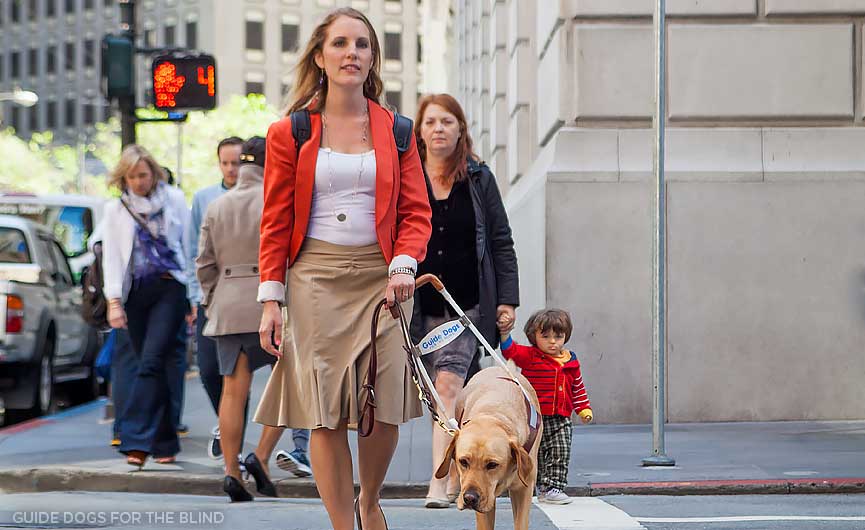
I recently returned to the field of education after an eight-year stay-at-home-mom hiatus. In addition to the typical reentry jitters and pondering over whether my favorite coral blazer is still in style, some more significant questions surfaced as I signed my contract: How will I travel to trainings and meetings after the closest bus routes to my house were just cut? What if one of my students or parents is allergic to my guide dog? And how many sessions with my accessibility specialist will it take for me to confidently use all the technology required to do my job?

As a person who is legally blind, these are legitimate questions to ask, but they’re also relatively straightforward to solve, especially when compared to the invisible barriers people with disabilities face.

The concerns that kept me awake the nights preceding my first day of new-teacher training were far more nuanced than transportation hiccups. My mind darted anxiously from cultural stigma to past experiences to potential perceptions, but it ultimately landed on this one question: At this organization, will I be valued for what I can bring or overlooked for what I lack?

As an educator with significant sight loss, I’ve had several work-related situations cause me to pause and wonder how to proceed.

In my early 20s, after my very first teaching job interview, the principal said the reason he wasn’t hiring me was that my eyes sometimes drifted to the sides instead of looking right at him. I later found out my student-teaching supervisor had called him to say how well I’d done with the eighth graders, explaining that my vision loss didn’t affect my ability to teach. She told him about the system I’d developed for calling on students though I couldn’t see their raised hands, and how I was so in tune with my three language arts classes that I made each of my 90 students an individualized certificate listing their unique gifts at the end of my 16 weeks with them. The principal still chose not to hire me. Neither did the principal at the school where I student taught. Fortunately, a principal in a nearby town was able to look past my disability and hired me to teach seventh grade language arts.

Yet consistent positive reviews in my first few years of teaching failed to shield me from others’ doubts. One behavioral specialist didn’t want to place her student in my classroom because she was afraid I wouldn’t keep a close enough “eye on him,” despite that he had an aide who would be there most days. While the student participated well in my class overall, I began to sense that his aide was focused on scrutinizing my ability to do my job rather than on helping this student. Thankfully this was not the sentiment of all my coworkers. I felt supported and valued as a team player by most. But an undercurrent of dissent can poison a sea of supporters when you’re feeling watched and pressured to prove yourself.

Fast-forward to last spring when I began applying for jobs after my mommy-hiatus: I was surprised to find that an element of discrimination still exists, at least in the hiring processes of several places in Southern California. The director of a local academy, for example, asked me how I was able to teach with my limited sight. I felt my throat tighten at the bluntness of her inquiry and tried to maintain focus as her hiring assistant sat next to her, sighing heavily throughout the interview, stating at the end of our conversation, “I really doubt we have a place for you here.” I debated not bringing my cane or guide dog into my next interview but worried I would appear intoxicated if I fumbled to sit down.

Thinking I’d have a better chance gaining employment at a local institute for the blind and visually impaired, I applied for a position as an instructor after noting that I met all the position’s qualifications. In my cover letter, I highlighted my active involvement within the blind and visually impaired community and how I have mentored others experiencing vision loss. I was disappointed when I didn’t get an interview or any written response at all, after multiple attempts to follow up on my application. When I expressed this to a friend who is blind and volunteers at the institute, she told me, “Oh, you shouldn’t have said you’re visually impaired in the cover letter. They don’t really hire people with low vision very often. Mostly just as volunteers but rarely as paid teachers.”

Right about now, anyone versed in disability law is raising a hand to comment, ready to point out that a seemingly small action, like asking someone directly about their disability during a job interview, is illegal and could even be grounds for a court case. I do realize this, but sitting in a courtroom just doesn’t seem like the best use of my time and energy. This is not to say others shouldn’t involve legal action in certain cases of work-related discrimination. I have friends who’ve had to fight to keep their jobs after losing vision, and I wholeheartedly support their efforts.

According to recent statistics, 17.5% of people with disabilities were employed in 2015, compared to 65% employment among persons without disabilities. I am convinced that at least a portion of those remaining 82.5% desire to work but are unable to cross barriers into the workplace.

As I continued my own job search, I remembered an interaction I had at an Apple store in Chicago a couple of years ago. I was asking about voiceover on my iPhone, and the technician became stumped over a couple of my questions. He apologized and said he’d check with his coworker, an expert in voiceover who used it all the time. “He’s blind and teaches all of us new tricks on voiceover,” he added. His statement gave me a sense of pride for some reason, like the technician without sight wasn’t some employee who everyone had to help but someone who brought unique, needed expertise. Simply hearing about this employee reminded me that I, too, have unique expertise to offer.

Being a credentialed teacher, not a techy, I knew finding a cutting-edge school would be more difficult than finding a trending tech company. Yet the explosion of new charter schools in California offered a large pond from which to fish, one that ultimately led me to my current position with an innovative charter school.

Since those in leadership typically set both the tone and precedent for interactions among coworkers, I was immediately impressed by how my director conversed with me about my needs. She offered her assistance and support if needed but didn’t hover or seem concerned. Not once has she asked me how I’ll keep up with paperwork, travel to meetings or learn the detailed technology component of my position. Not once has she asked me how I’ll do my job. She hasn’t asked me because she’s focused on something far more important than my disability: what I can bring to her team.

While it requires openness, hiring someone with a disability is hardly an act of charity. Yes, incorporating someone who is differently abled often entails accommodations, extra meetings or time in training for both the new hire and others within the organization. There are potential risks and real barriers, but there are also real benefits.

People with disabilities are accustomed to finding alternative solutions to difficult questions, because troubleshooting is part of our daily lives. There are strengths I bring to my position because of, not in spite of, my vision loss. I relate with students who are struggling in a way that others may not, and I will not cease searching for the unique ways students show their intelligence, not just the traditional ones our education system deems important.

When an organization offers someone the opportunity to bring their talents, skills and knowledge to the table, they will absolutely show up and thrive. Giving a differently abled person the chance to excel in what they are skilled at not only allows that individual to succeed, but it also promotes a culture of perseverance among everyone. When I watch my students progress in their learning journey despite challenges, I feel motivated to move forward in my own educational discoveries. And when an organization hires and values qualified employees who are differently abled, the organization sends a resounding message to its team and to the public: “Here, we care about what each employee uniquely brings.” Or, as stated simply in the words of my favorite poet, Maya Angelou: “In diversity there is beauty and there is strength.”

 

Acquired Savant Syndrome: Meet an Accidental Genius

(Repost from article by Joy Thomas from Crixeo Magazine)

AN ACCIDENT UNLOCKED JASON PADGETT’S MATHEMATICAL AND ARTISTIC POTENTIAL, MAKING HIM ONE OF ONLY 40 PEOPLE IN THE WORLD WITH ACQUIRED SAVANT SYNDROME.

Jason Padgett, who has acquired savant syndrome, says he wouldn’t change any of the pain he underwent after being beaten, as he now sees the world in an overlay of geometric fractals that he believes hold answers to some of life’s biggest questions.

With the popularity of shows like The OA, The 4400 and Second Chance, questions about the human brain’s hidden abilities surface, leaving many of us to wonder what price we’d pay to unlock hidden neurological gems. Though these shows are fictional, the brain science behind some of them is not. And there are real-life people to prove it.

Read more…

https://www.crixeo.com/savant-syndrome/

Service Animals: A ‘Chosen’ Career Path or a Life of Servitude?

(Repost of article by Joy Thomas from Crixeo Magazine)

MANY PEOPLE SEE THE RELATIONSHIP BETWEEN SERVICE DOG AND HANDLER AS A BEAUTIFUL, SYMBIOTIC BOND, BUT SOME ANIMAL RIGHTS ACTIVISTS VIEW IT AS HARMFUL. ARE SERVICE ANIMALS ‘HAPPY’ WORKING? WE ASKED THE EXPERTS.

Amanda Bagwell-Chase, a self-proclaimed animal rights activist, proudly wears a T-shirt displaying a lion’s paw print next to a human handprint, referring to Cecil the Lion and symbolizing unity between animals and humans. But on several occasions Bagwell-Chase has been the target of public ridicule while wearing this shirt. The reason? She wears it while holding the harness of her service dog, Patsy.

Read more…

Crixeo – Crixeo

Our Crixeo.com experts test and compare the best products and services in many categories. We make recommendations to help you make the best possible informed decisions in the areas of personal loans, debt consolidation, online therapy, mattresses, and much, much, more…

7 Lessons Learned on a Paddle Board

20247589_1900845293573972_6553534300030194330_oLesson #1:  Paddle boarding visually impaired is the perfect illustration to describe the continuum of blindness that confuses the public (i.e. for people who are perplexed when they see someone with a guide dog or cane reading a text message with their eyes).  

Navigating around Newport Harbor today reminded me of my favorite quote about my eye disease, Retinitis Pigments. ”RP is seeing a tiny piece of paper across the room and then tripping over an elephant on the way to pick it up.” I paddled hard to the right in order to avoid a small buoy, feeling extremely proud of myself for spotting the bobbing mound of plastic, only to ram the tip of my board directly into a giant boat, which seemed to literally appear out of nowhere, though it rocked there gently all along. That’s RP, my friends: the person standing silently by the elevator, unbeknownst to you, who suddenly says “hi”, startling you to a halt. The trickery of RP is that you see many things. And then you don’t. You think you’re gliding along just fine. And then you crash. You see just enough for your mind to convince you that you’re seeing the whole picture. But you’re not.

The mobility help of a guide dog or cane might seem confusing or unnecessary to some. But it isn’t. Mobility aides keep second-guessing to a minimum and prevent run-ins with mute elephants and strangers near elevators who come out of nowhere (and perhaps with silent sea vessels if they were useful in water). #blindpaddleboarding #guidedogsfortheblind

Continue reading “7 Lessons Learned on a Paddle Board”

9 Reasons I Love Driving My VI Daughters (and grandkids!) Places (guest post by Judy Derpack)

My mom sent me this list, and I read it on a day I really needed a different perspective.  After my kids’ ride to their theater rehearsal cancelled, it was too late to call an Uber, so I had to quickly ask a neighbor to drive them.  She was in the middle of cooking dinner for her family and seemed stressed by my request, and since inconveniencing people is always a fear, I felt like a complete burden.  If it hadn’t been one of their last practices before their big show, I would have just had them skip it in order to avoid having to ask.  Even when people tell me they are happy to be helping me out, I still feel like I’m imposing on their day.  Reading my mom’s perspective helped me to see that there are some benefits for the driver, or at least my generous mom chooses to see the benefits!  Even though I live too far from her to regularly enjoy the benefits of riding with her (lucky duck, Jenelle!), I am grateful to know all of the many reasons she considers her chauffeuring days a gift.  Thanks mom!  

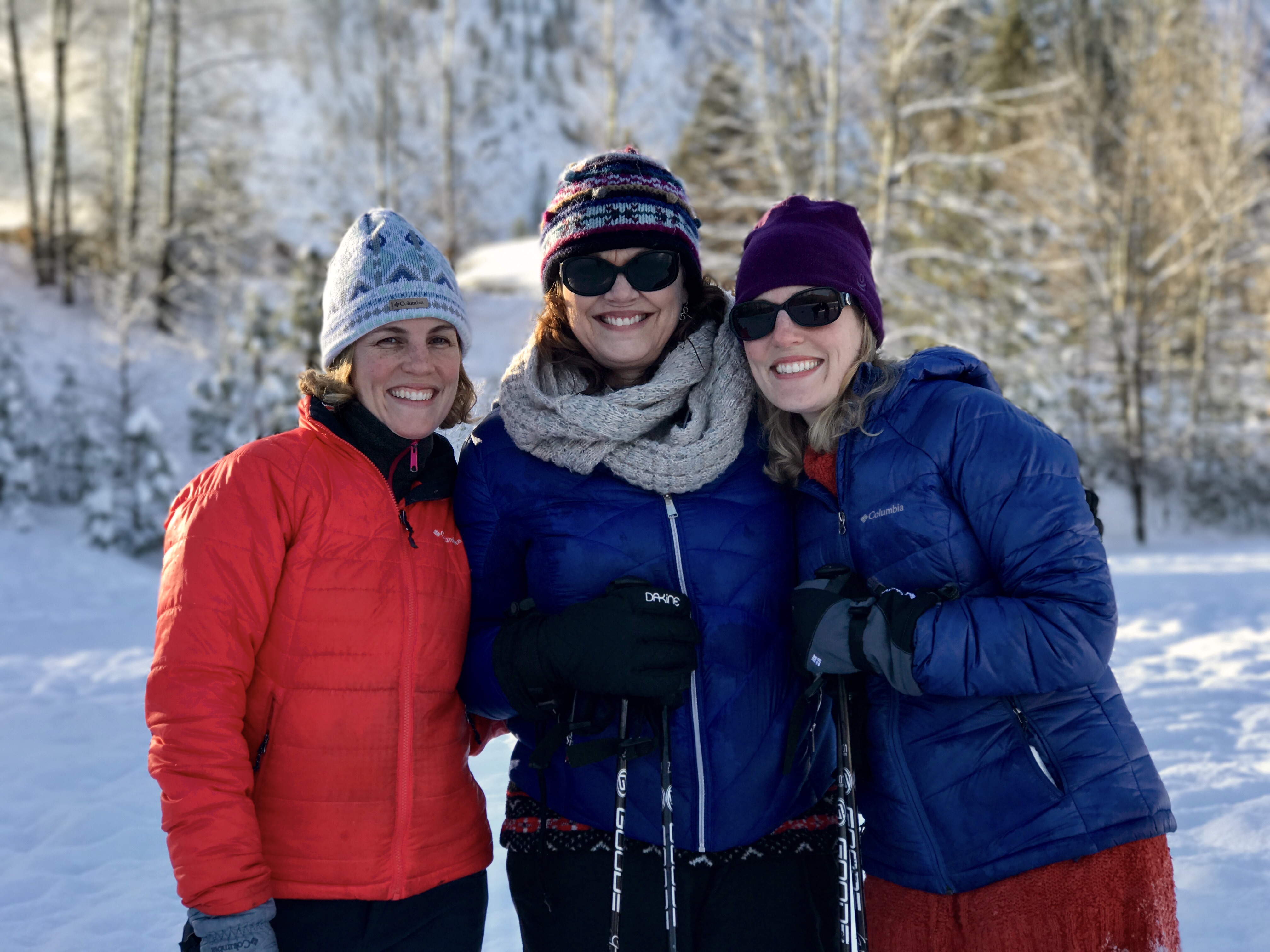
Visual Description: Joy and Jenelle with their mother, Judy, decked out in snow gear with a snowy background.
  1. Quality time talking, planning family events and attempting to solve the world’s problems.
  2. Someone to share an “adventure” with.  My family knows my motto is “life is an adventure” (which I say every time I get lost driving somewhere).
  3. More chances to see my grandchildren.
  4. Better price shopping because two heads are better than one.
  5. I swear less at rude drivers.
  6. I get to research good parks to play at.
  7. It provides an opportunity for my old brain to practice multi-tasking.
  8. It reminds me to clean my car more often.
  9. It keeps me from taking the gift of driving for granted; I am very grateful. In a few years, I’m sure I will need someone to start “driving Miss Judy”.

Roja Reports: Halloween, Homeschooling and Heresy

img_0414
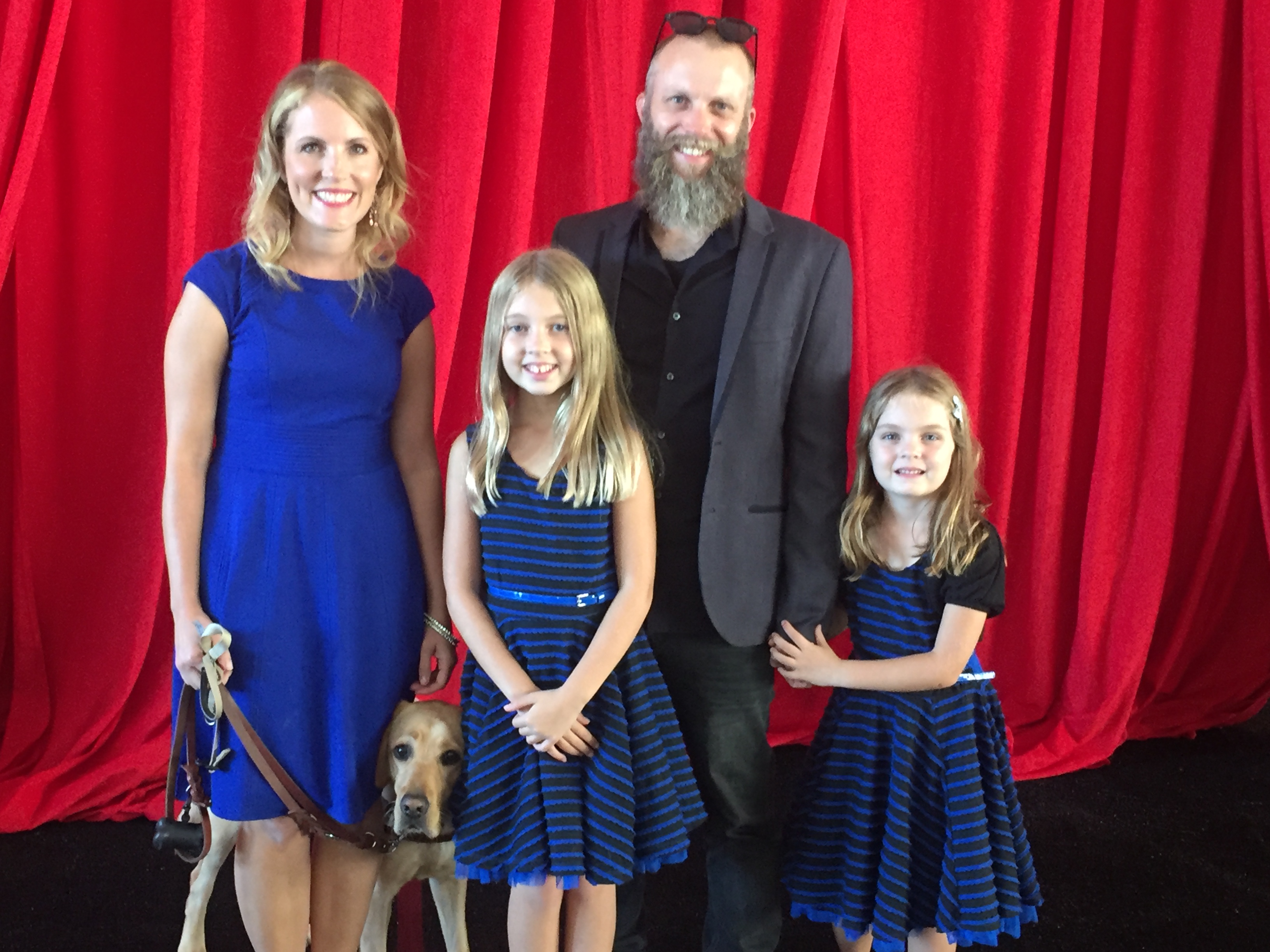
Visual Description: Joy and Roja with Joy’s husband and two daughters against a red curtain backdrop at Guide Dogs for The Blind Canine Heroes Wine Auction

It’s been awhile, I know.  Joy just keeps me hoppin’. Salt Lake. Portland. Leavenworth. San Fran. Most of those places had guide dog friends for me, though, so I’m not complaining.

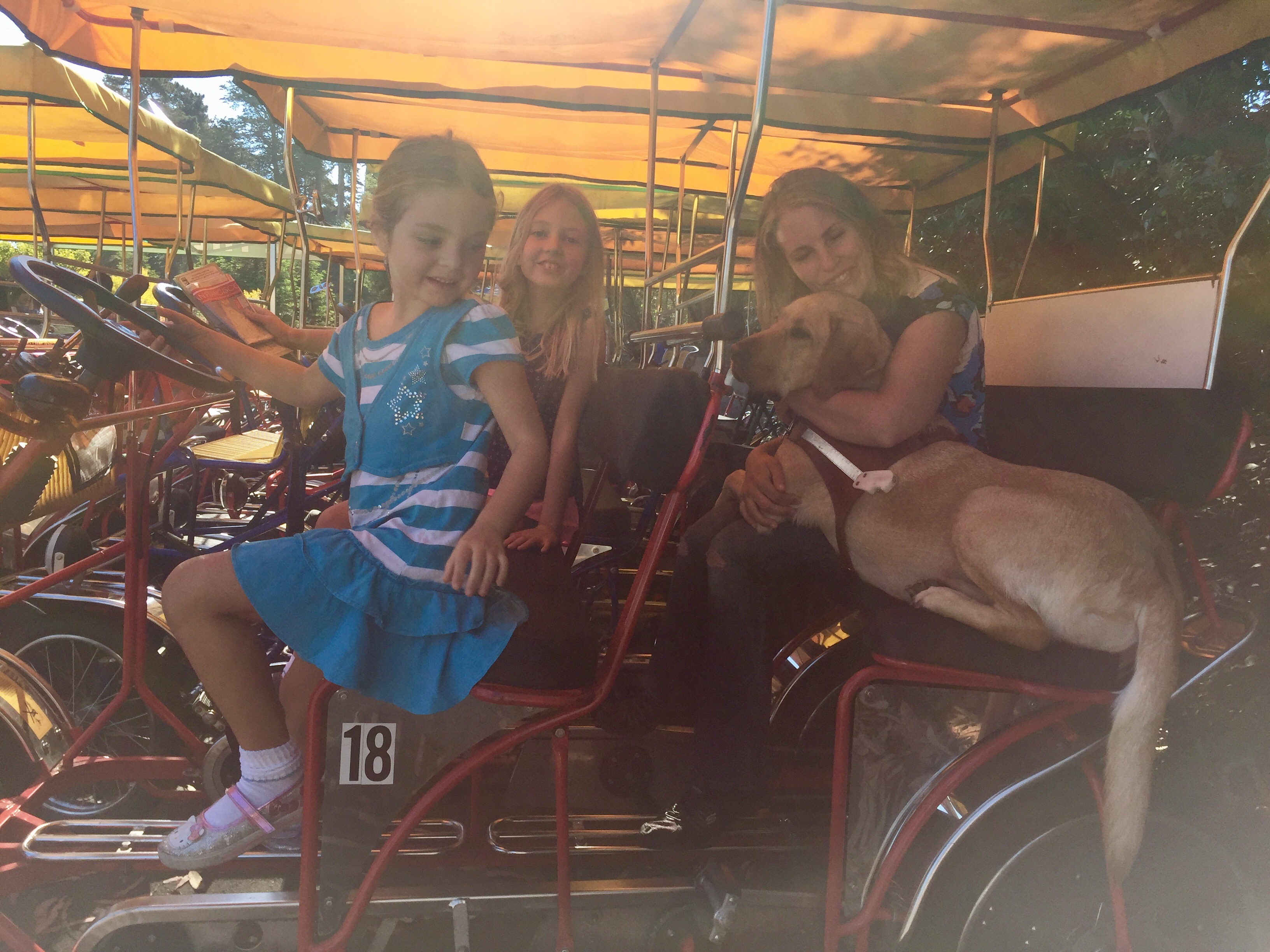
Of course, on each of these trips, Joy planned a million things.  She even tried to get me on a giant bicycle in Golden Gate Park that she called a surrey.  It was terrifying!  Thank goodness her husband talked some sense into her.  i’ve always liked that guy, partly because he’s hairy like me, but mostly because he has common sense:  you don’t fit a 60 lb dog on skinny bicycle seats..

fullsizerender-11
Visual Description: Joy embracing a frighted Roja while her girls look onward on a 4 seat Surrey bicycle.

Continue reading “Roja Reports: Halloween, Homeschooling and Heresy”

Guest Post: Performing in Blindface

recent Salt Lake City gathering.

Continue reading “Guest Post: Performing in Blindface”

Better Place: A Year With Roja

Screen Shot 2016-08-08 at 8.24.53 AM

One year ago today, Roja and I graduated as a team from Guide Dogs for the Blind in San Rafael, CA, and life hasn’t been the same since. In addition to getting Roja, this past year has been full of both amazing and difficult changes. From moving across the country and being apart from dear family and friends to growing in confidence as a mom, writer and teacher, Roja has been a constant companion who shows unconditional love (and licks!). Continue reading “Better Place: A Year With Roja”

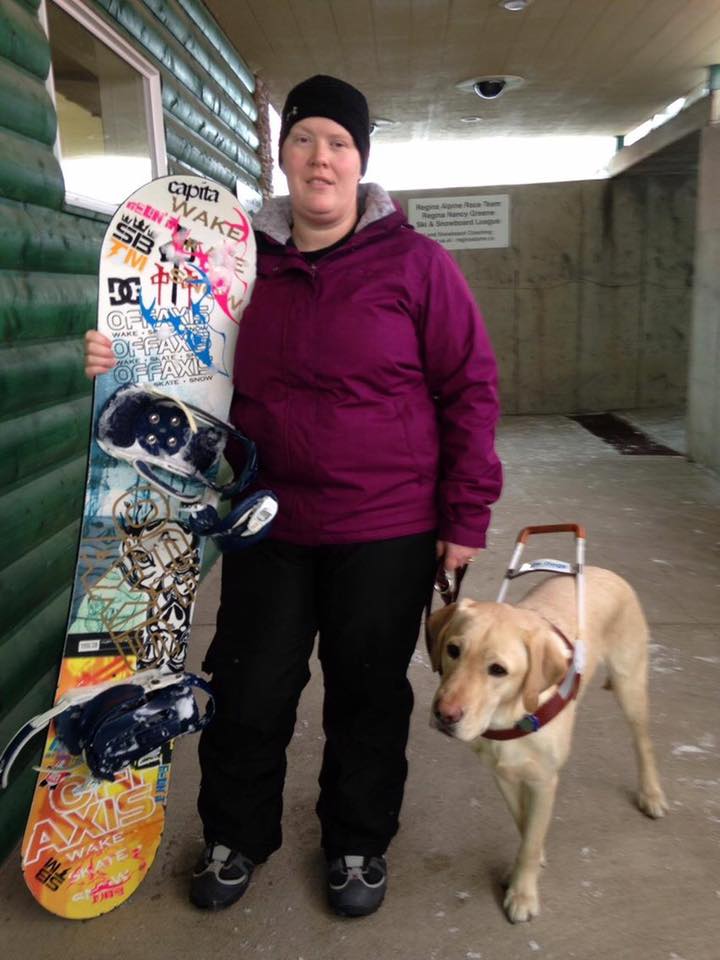
Blind Snowboarding: How She Does It and More

Snowboard Photo
Photo description: Ashley holding her snowboard with her guide dog, Rick, by her side.

As soon as I started connecting with Ashley Nemeth from Mommies With Guides, I immediately noticed something refreshing about her: she is completely matter-of-fact about her blindness and her accomplishments.  She is almost totally blind, so as soon as I heard that she is an avid snowboarder, I of course, had to ask how she does it.  I think you’ll find her response quite interesting!  

Continue reading “Blind Snowboarding: How She Does It and More”