
 Continue reading “From On Top of the World to Reality: Transition Home”
Continue reading “From On Top of the World to Reality: Transition Home”
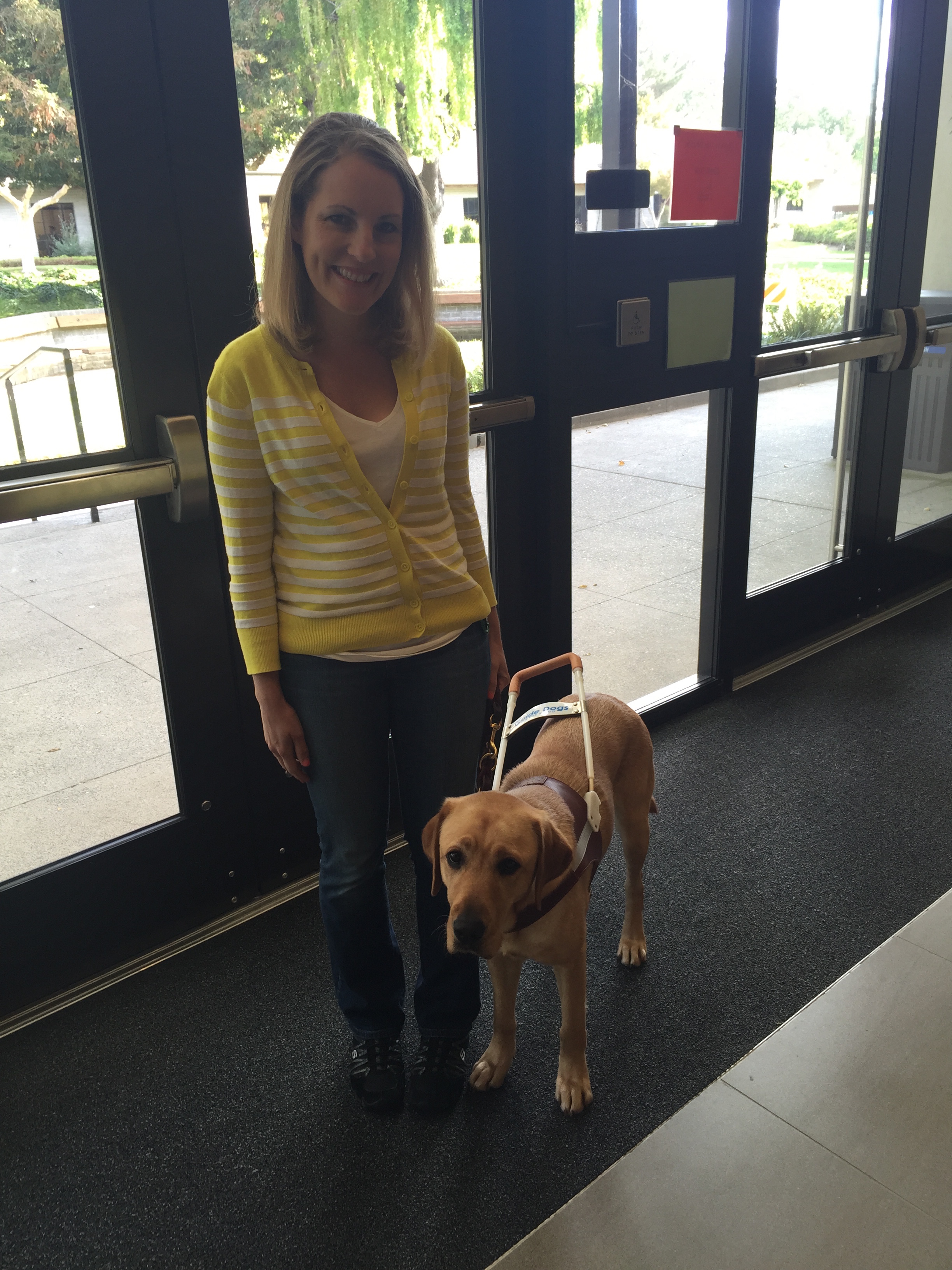 “What are you looking for in a guide dog?”
“Um, Well, a smallish sized dog who is calm and has a drier mouth, maybe a yellow lab although color isn’t as important. Oh, and I want a dog who is super fast.”
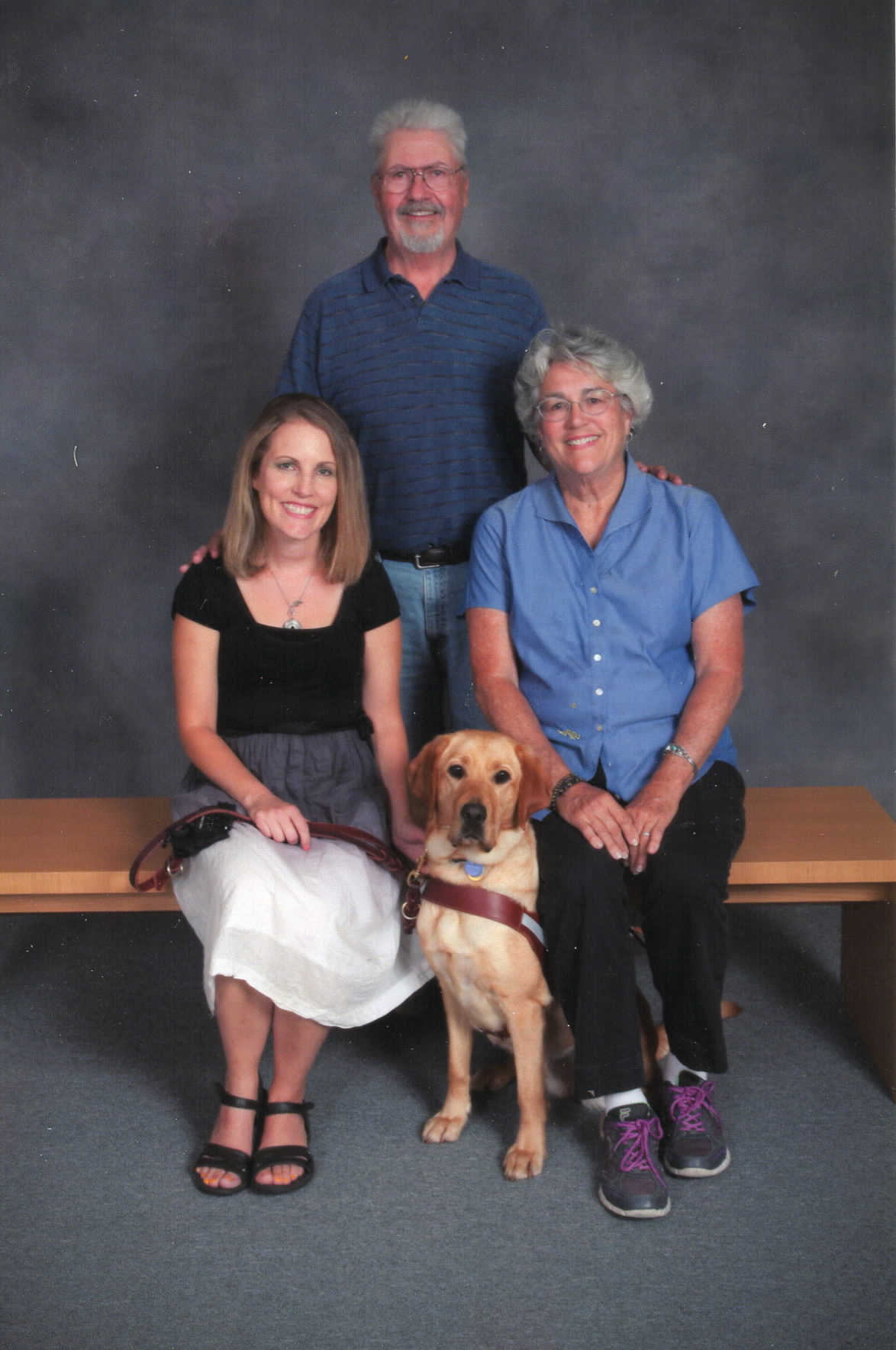
I could tell Roja met my criteria from day 1, even though bonding has continued to be challenging. I’m now in my second week of training, and I still find myself feeling jealous of other students and their constantly playful, cuddling dogs. Yes, Roja, gives “hugs” with her whole body and loves playing “tug” and occasionally rests her soft head on my lap, but these signs of affection are definitely on her terms, intermittently, when she feels like it! She still moves away when I reach to pet her head, and I’m still learning what makes her tick. Continue reading “I Believe I Can Fly (summary of First Week at GDB)”
 Hands,
stacked and held,
matted and framed
hanging on a hook above my bed.
Four hands. Mine is at the bottom, followed by my grandmother’s, my mother’s, and the tiny newborn hand of my eldest daughter. When a friend took the picture 8 years ago, I had no concept of the significance it would hold for me in future years when the physical hands would begin to perish.
I have a dirty little secret to share. A housekeeper cleans my home once or twice a month. And….that’s it. That’s the secret. Pretty dirty, I know.

I am not wealthy, but rather house cleaning is something I prioritize in my monthly budget. It’s not as though my house needs to be perfect. I have 2 small children (8 if you count my husband), and a dog, so a perfect house would be quite a stretch at this point in my life. Continue reading “Mr. Clean”
Spring has sprung, and that means lots of park dates with the kids. Playground conversations amongst the parents can be riveting. Yesterday’s topic of discussion was dishwashers. Some people have them. Some do not. Two of the non-dishwasher moms were lamenting this missing appliance
“Yes,” I chimed in, “That would be so hard not to have a dishwasher.”
“Well, I mean, it’s not that bad,” one of them responded in defense, “You just get used to it after awhile.”
“Yep,” piped in the other mom, “People lived for many many years without the luxury of dishwashers. It’s really not a big deal.”
“True,” I agreed, changing my stance like a crafty politician, “It would probably force me to stay on top of my dishes if I did not have one.” Continue reading “Life Without a Dishwasher”

Friends and family have often expressed to me and my sister their concern over whether they are being helpful when we’re out and about.
We have told people there is no right or wrong way, and no specific expectation, This is half-true. I posted a list of tips and pet peeves a couple years ago, though looking over it now, it may be too detailed to remember.
Some friends have observed our husbands’ interactions with us and followed their lead. This is an overall wise idea, as our men have been with us long enough to help us seamlessly. My husband, however, has been known to be so laid-back and hands-off that I have walked into signs and fallen down a flight of stairs walking right next to him! This may be why he recently told me that he feels excited when I pull out my cane. Continue reading “The #1 Way to Assist a Person With RP in Public”
“You’ve got to read the book I just finished,” I heard Joy telling my voicemail. This was not an uncommon message for her to leave. Recommending the latest and greatest books to each other has been happening since our “Sweet Valley Twins” days.
But what she said next sparked my interest a little more than usual.
“The author is a mom about our age who wrote a memoir about her life and she has RP just like us. She actually sounds like someone we would be friends with.”
I instantly knew she meant that we would be friends with her because of her personality, not her RP. I uploaded the book from Audible a few minutes later, and began the journey into Nicole C. Kear’s memoir “Now I See You”. Continue reading “Book Review: “Now I See You””
Last summer I had the idea to start a legacy story-telling business that would help capture people’s life stories through video, audio and print. I bought 3 different domain names because I couldn’t come to a final decision, and the name I really wanted (Legacy Storytellers) was already taken. I worked on my web content, read and researched everything related to personal storytelling, met with experts in the industry, interviewed possible videographers, and began making plans to attend “The Association of Personal Historians” annual conference. I talked incessantly about my budding career plans, announcing to family and friends my goals for the year.
And then I took a little sip of air, often referred to as a breath.
And I exhaled for the next several months, wondering if this is the right time to start such an endeavor and feeling kind of embarrassed that I opened my mouth to so many people about it. Continue reading “Bloom”
I love to read about other people’s struggles, especially if they are very different from my own and if they have overcome something unimaginable to me. Whether it’s the personal memoir of an oppressed woman in the Middle East or wise sentiments from a man born with no limbs or a documentary about a wealthy hoarder in New York.
It doesn’t matter whether it’s dramatic, life-altering challenges, though those tend to be the ones that grab my attention, I glean just as much wisdom from writers like Brené Brown and Ann Lamott in their depictions of more common human ailments, such as shame and chemical addiction.
Back when I taught 7th grade, I was the only weirdo English teacher who chose “Life’s Biggest Challenge” as my students’ major narrative essay topic. While other teachers were assigning jovial topics like “What I Did Over Summer Break” in which kids could write about al the fun they had riding Big Thunder Mountain at Disney, I was “that” teacher asking 12-year-olds to think about their deepest struggles in life. And how they overcame them or how they continued to face them. Granted, preteens these days do face incredible challenges, and there were maybe 2 or 3 kids each year who were able to articulate them and put them into any kind of big-picture perspective in a concise essay. But for the most part, I read handfuls of narratives about overcoming skateboarding or gymnastics stunts that the students had attempted to master all of their lives. Continue reading “Choosing Our Struggles”