Podcast Updates: Our Offering to You and How You Can Help

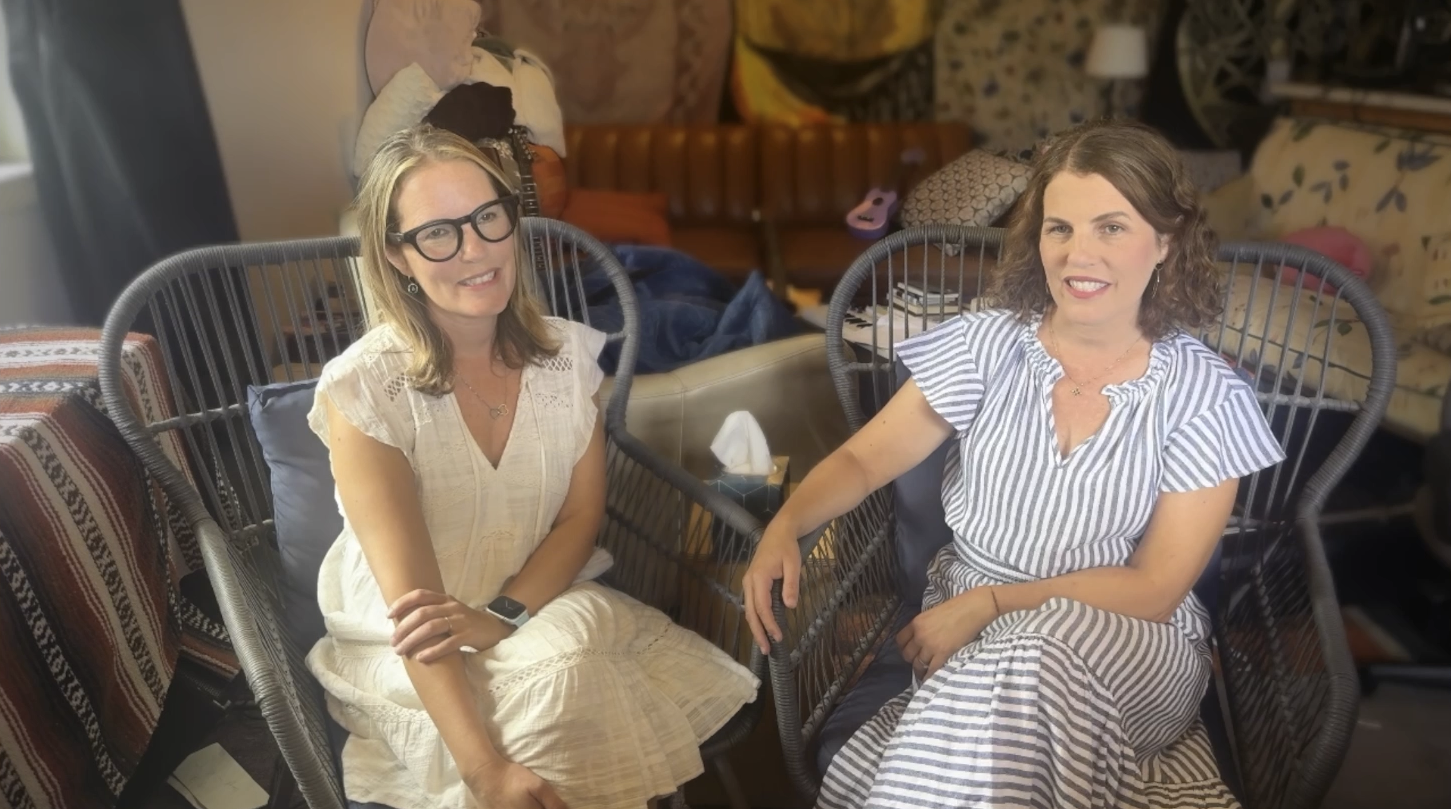
Two women seated in stylish chairs surrounded by various home decor items, smiling and engaged in conversation.
Visual Description: Hosts Jenelle and Joy engage in a thoughtful conversation for the DoubleVision Podcast, reflecting on identity and emotional journeys.

As we step into a new year, we wanted to pause and share a few updates about the DoubleVision Podcast, why we’re doing this work, and where we’re headed next.

We launched the podcast in October with a lot of excitement and, honestly, a fairly ambitious plan: weekly episodes. It didn’t take long for us to realize that while we love this medium, it requires far more time, energy, and care than our blog posts ever did. Recording, editing, reflecting, and preparing these conversations asks something different of us.

By November, we made the decision to slow the release schedule to every other week. That shift wasn’t about doing less. It was about doing this work in a way that feels grounded, thoughtful, and sustainable.

We released our final episode of the year just before the holidays, and today we’re sharing our first episode of the new year.

Why We’re Doing This and How You Can Help

At its core, this podcast is an offering.

We continue to show up for these conversations because we feel called to do so. Talking openly about identity, disability, grief, access, belonging, and the emotional realities of vision loss matters to us. These are conversations we wish had been more visible earlier in our own lives, and we believe there is real value in creating space for them now.

This work takes time, care, and emotional energy, and we offer it freely to the community. If the podcast resonates with you, the most meaningful ways to support it are simple: subscribe so new episodes show up automatically, rate and review the podcast on your listening platform, and share an episode with a friend or family member who you think might benefit from listening. These small actions help the podcast reach others who may need these conversations too.

Today’s Episode and an Important Conversation

We’re especially excited to share today’s episode, which continues our two-part series on identity and releases alongside a powerful conversation with Adam Mock.

Adam is a Leadership Coaching Specialist, keynote speaker, and the author of Rescue Your Dreams. He brings more than twenty-five years of experience helping individuals and teams grow in clarity, confidence, and purpose. His work spans corporate, athletic, and educational spaces, with clients including Olympic athletes, Nike, PayPal, Jordan Brand, and Converse.

In this episode, our conversation centers on identity at its core. Not our roles, achievements, or losses, but who we are beneath them. We explore the difference between being and doing, how identity is shaped and protected over time, and what it means to move forward with intention, especially at the beginning of a new year.

What We’ll Be Exploring This Year

Many of our early episodes focused on grief and identity, and we’ll continue to return to those themes with more depth and nuance. As the year unfolds, we’ll also be exploring additional aspects of the social and emotional journey of vision loss, including:

  • The backstage of disability and what rarely gets talked about
  • Shame and how it quietly shapes behavior and self-perception
  • The complexity of receiving help and negotiating independence
  • Rewriting the stories we’ve inherited about ourselves
  • Identity, belonging, and how they evolve over time
  • Access, intimacy, and relational dynamics

Some episodes will be deeply personal. Others will be conversational or reflective. All of them are rooted in lived experience and a desire to name what often goes unspoken.

A Special Thank You

This podcast would not be possible without the support of our small but mighty team. We want to extend a heartfelt thank you to Tracy Schakohl, our producer, whose steady presence and care help bring each episode to life, and to Benjamin Jay Thomas, our media and tech specialist, who supports the behind-the-scenes work that keeps everything running smoothly.

We’re deeply grateful for the time, creativity, and commitment they bring to this project.

Thank you for being here. We’re grateful for everyone who listens, reflects, and walks alongside us in these conversations. We’re looking forward to continuing this work together in the year ahead.

With appreciation,

Jenelle and Joy


Listen to, rate and subscribe to DoubleVision Podcast on:

Apple Podcasts

Spotify

YouTube

We’re in This Together: Exploring Access Intimacy

DoubleVision Podcast episode 2 this week, friends!

In this episode, Joy and Jenelle invite their husbands, Benjamin and Torrey, to join them in an insightful conversation about access intimacy… a term coined by disability justice advocate Mia Mingus. Together, they explore what it means to give and receive help in ways that honor autonomy, trust, and interdependence.

The foursome reflects on how overhelping can stem from fear or anxiety, and how practicing attunement—being tuned in to someone’s needs—creates deeper connection. They share stories of laughter, vulnerability, and growth, showing how humor can ease hard moments and strengthen relationships.

Drawing inspiration from _Sitting Pretty: The View from My Ordinary Resilient Disabled Body_ by Rebekah Taussig, the conversation touches on universal design, accessibility, and the creativity that disability invites. To learn more about the origins of access intimacy, visit Mia Mingus’s blog at https://leavingevidence.wordpress.com

Have a question for us or a topic you’d like us to discuss? Leave us a voicemail at 949-414-8336

*Chapters*

*00:00*Introduction to Access Intimacy

*02:44*Empathy and Anticipating Needs

*07:03*The Subtlety of Helping

*10:24*Awareness and Responsiveness in Public

*15:28*Navigating Partnership Dynamics

*21:33*The Quest for Accessibility Superpowers

*28:15*Finding Your Voice and Humor in Vulnerability

Breaking News… We’re Launching a Podcast!

TODAY… in honor of Blindness Awareness Month, we released our very first podcast episode. This is something we’ve talked about starting for years, and thanks to a recent, unique airport experience, we finally sat down and hit “record.” We would love for our DoubleVision readers to listen and share with anyone who might benefit from discussions on the social and emotional impacts of vision loss.

Subscribe below via Apple Podcasts and Spotify for the audio podcast, and YouTube for the video version!

– Joy and Jenelle

Watch the first episode, “Who’s That Voice in My Glasses? – Exploring Interdependence with Be My Eyes and Meta Glasses”

Sight-Splaining and Other Ways of Knowing

As both a writer and an educator, I often find myself tasked with explaining things—breaking concepts down, putting them into words, making them make sense. But as I move through life with less and less vision, I’m becoming more aware of the things that don’t need explaining at all. In fact, there are entire realms of experience—felt, embodied, intuitive—that speak for themselves if we’re quiet enough to listen.

A while back, the word sight-splaining came to me. I genuinely thought I was coining the term. It turns out it was used during a 2019 AFB (American Foundation for the Blind) conference in the context of advocating for systemic change. So perhaps the phrase was already out in the ethers, floating around, and simply made its way to me.

A man shouting into a megaphoneSight-splaining happens when a sighted person describes something visual to a blind or visually impaired person—something that person could easily interpret through other senses or their own direct experience. It’s a bit like mansplaining—a term that describes when something is explained, usually by a man to a woman, in a way that feels unnecessary, condescending, or obvious. When I picture my husband mansplaining (which thankfully doesn’t happen often), I imagine him over-explaining something I already know. Sight-splaining, like mansplaining, is usually well-meaning. But it can still reflect a subtle assumption that vision is the most valid or complete way of experiencing the world.
Let me offer a couple of examples.

During a yoga class, the instructor handed me a ball and then carefully described how it was squishy—softer than ones typically used in class. While I appreciated her intention, it struck me as a bit amusing. I was literally holding the ball. I could feel it.

Then, at a water aerobics class, a classmate turned to let me know that parts of the pool floor were smoother and more slippery. First, it was kind of funny—we were in the water. If I slipped, I’d still be in the pool. Second, I have feet. I could easily figure it out myself.

These moments highlight how we often prioritize sight as the primary way of understanding the world—sometimes forgetting the richness of other ways of knowing.

Recently, at a music gathering, I was struggling emotionally. I didn’t say anything—not in conversation or through body language. There was nothing visible to suggest I was having a hard time. And yet, as we stood singing together in a circle, the friend on my left gently squeezed my shoulder. The friend on my right reached out and held my hand. It was clear they both knew. Not through sight, but through presence. Through attunement. Through a deeper kind of seeing.

And here’s the thing: even as I write about it now, I can feel how trying to describe the moment somehow dims it. There’s something sacred that gets lost in translation when we try to pin soul-level knowing into words. That’s what I’d call soul-splaining—trying to explain an experience that was never meant to be explained, only felt. There’s a vague sense of what happened that a reader can grasp, but no retelling can replicate the depth of what I experienced in that moment.

Of course, it’s important not to confuse sight-splaining with genuinely helpful audio descriptions, which allow me to tune into moments I might otherwise miss. A family member recently described what was happening during a hibachi dinner—the chef tossing eggs in the air, flipping utensils, preparing the food with flair. It gave me clues to the shared moment we were all enjoying together. The same goes for the person I hired to audio-describe my daughter’s dance performance—something I wrote about in my Blind Dance Mom post. These kinds of descriptions are beautiful, thoughtful ways of including—not assuming.

So here’s a question I’d like to leave you with:

When you find yourself grasping for words to describe something, whether a felt experience or something you really want the other person to understand, take a brief pause to get curious about what’s behind the need to describe it. Is it something the other person, sighted or blind, may be able to intuit themselves?

Sometimes, in that space before we reach for words, we discover that the experience is already whole.

As Helen Keller once put it, “The best and most beautiful things in the world cannot be seen or even touched—they must be felt with the heart.”

“Navigating Suffering Through Compassion with Joy Thomas and Jenelle Landgraf” – Rescue Your Dreams Podcast

We had the pleasure of joining our friend Adam Mock on his inspiring podcast, “Rescue Your Dreams”. Here’s what he had to say about our conversation. Give it a listen below and be sure to follow “Rescue Your Dreams”! – J & J

Navigating Suffering Through Compassion with Joy Thomas and Jenelle Landgraf

Visual Description: Podcast image of Adam Mock with Joy and Jenelle

In this episode, my guests Joy Thomas and Jenelle Landgraf take us on a journey of navigating life’s challenges by embracing compassion and accepting the messiness of circumstances we didn’t choose.

Joy and Jenelle are identical twin sisters, writers, and co-creators of the Double Vision Blog, where they share their experiences living with retinitis pigmentosa (RP), a degenerative eye disease. Although they face the same struggles with vision loss, their perspectives on life and how they manage their challenges differ, offering unique insights to their readers.

Through their writing, Joy and Jenelle aim to show that there’s no one “right” way to go through suffering. They believe that by sharing their personal stories and focusing on compassion, they can help others find strength in difficult times and navigate their own hardships with grace and understanding.

Their mission is to encourage readers to embrace the imperfections of life, using compassion as a guide, and to foster deeper connections through shared experiences.

Listen on Spotify

Listen on Apple Podcasts

Grief Gone Wild

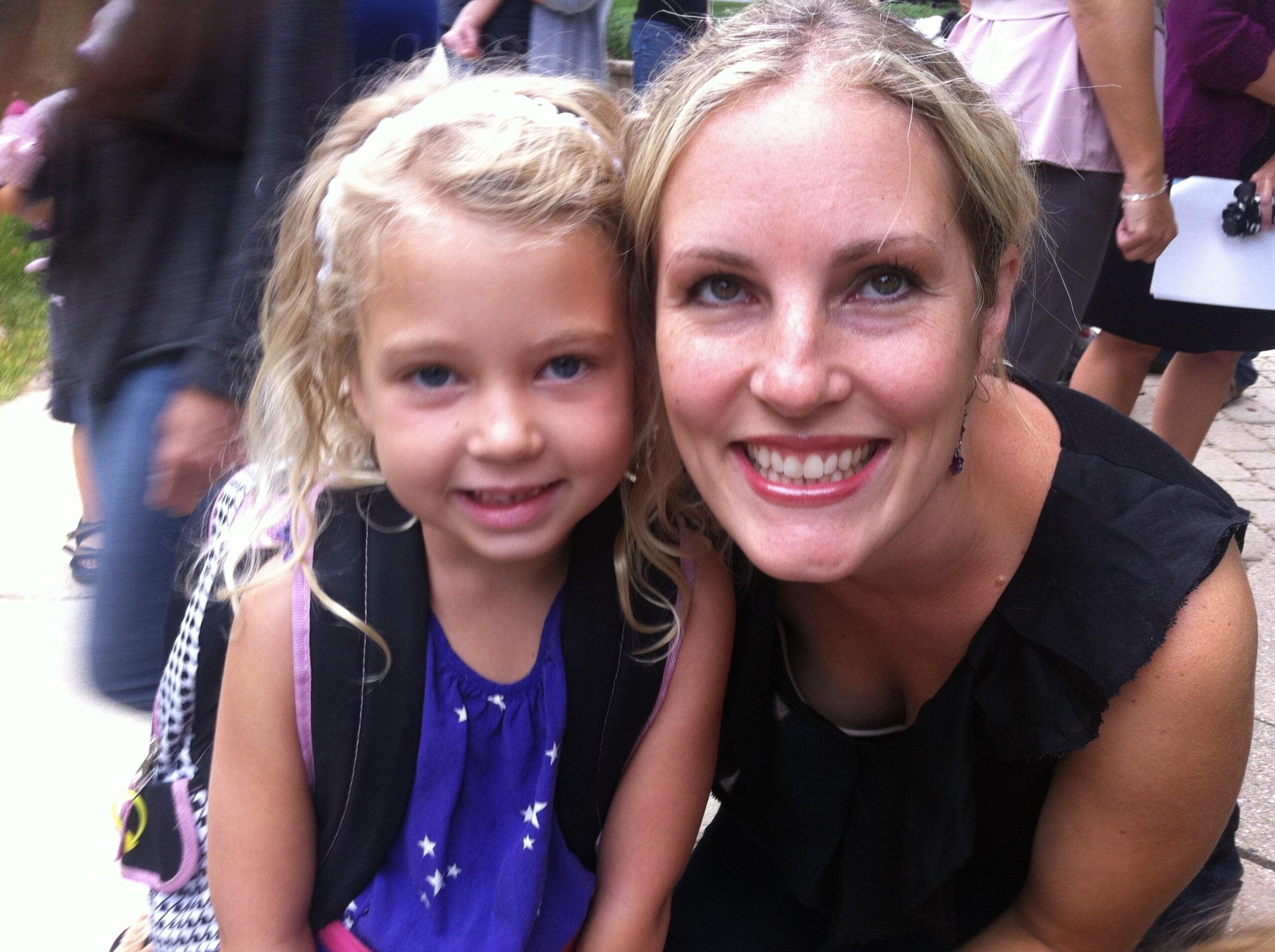
 a sweet moment between Lucy and her mom, Joy, on Lucy’s first day of first grade. Lucy, with her curly blonde hair and a gentle smile, wears a purple dress with white stars and a checkered backpack. Joy, smiling brightly beside her, leans in close, her blonde hair pulled back. The background suggests an outdoor school setting, filled with excitement and new beginnings.
Photo Description: A sweet moment between Lucy and her mom, Joy, on Lucy’s first day of first grade. Lucy, with her curly blonde hair and a gentle smile, wears a purple dress with white stars and a checkered backpack. Joy, smiling brightly beside her, leans in close, her blonde hair pulled back. In the background, a school setting, filled with excitement and new beginnings.

Grief comes in all shapes and sizes, and for all sorts of reasons. It is, at its most basic level, our response to loss. At the heart of loss is change. I once heard someone say that we as humans equally crave and fear change. I experienced this in 2006 upon the arrival of our firstborn, Lucy Joy.

I was, like most first-time moms, completely overjoyed and completely overwhelmed. I was also surprised by something no one had warned me about and a bit worried I was alone in feeling it. I missed having my baby safely in my belly. The outside world suddenly felt so big, and she was so small. The human realm felt a bit unsafe, like it could blink her 7 lb 6 oz frame out of existence in an unaware twitch of its monstrous eye.

While I loved the feeling of being pregnant, by the 9th month my body was, of course, relieved not to be lugging another human around in my abdomen, but my mind and heart had some catching up to do.

As a writer, I liken it to the process of a tiny seed of an idea transitioning into a published piece. What was once part of your inner world is out there, open for the world to read and enjoy but also to critique.

Author Elizabeth Stone put it well when she wrote,
“Making the decision to have a child — it is momentous. It is to decide forever to have your heart go walking around outside your body.”

Both conventional wisdom and science support the idea that changing hormones are a major contributor to the “baby blues” and postpartum depression, but upon reflection, I wonder if the grief of such a major change, despite being a joyous change, is a larger factor than we often acknowledge.

As I move through another major change, sending Lucy off to college, familiar feelings from 18 years ago resurface. My little seed of an idea has sprouted from a small published piece into a fully developed novel and is now being adapted into a screenplay.

It’s a writer’s wildest dream, and yet many people forget how screenplays are typically written by a different writer. It’s still your story, and yet it’s not your story.

As an artist, at some level, you realize it was never really “yours.” Your muse always intended for you to share it. As a parent, it’s precisely the vulnerability of sharing your child with the world that leaves you wondering whether your child is prepared to transition into adult life. If you’re lucky, you catch glimpses of readiness as their departure from home draws nearer. I caught one of those glimpses on a hard day recently.

I was home alone following a vision-related incident that left me in a moment of incredible grief and shame. It had been quite a long time since I’d felt any intense emotion related to my vision loss, and it was as if several years of pent-up sadness came pouring out. I found myself sobbing on my bedroom floor in what I thought was an empty house. Lucy, who had gotten home early from work, heard me and rushed into my room, probably worrying someone had died with how hard I was crying.

I don’t think I ever intended to hide my emotions from my kids, but in retrospect, I mostly kept my feelings private for fear of burdening them or passing down pitying narratives about blindness. But in this raw, untamed moment of grief, there was little space for philosophy or pride.

Between sobs, I recounted the grief-inducing incident and a litany of fears about the future. I felt small, unedited, and a bit afraid of her response. After all, I’m the parent. Shouldn’t I be the one with the answers, comforting her?

To my relief, Lucy knelt down on the floor with me, wrapped her arms around me, and cried with me. She spoke words of empathy and love, and soon our tears turned to laughter, and we sat on my floor and talked for several hours. It was there that I glimpsed signs of readiness for the world that reassured me as a parent. Yes, university, future mentors, and travel will support maturity and growth. But as both an artist and a mom, I’m proud to have a small part in shaping a character with heart—one who can sit and be present in a wild moment of grief with another human being.

There will be viewers who will never know the characters in your book the way you do. They will never reach for the 1-year-old the way you did when she gleefully chased a flock of geese at the park, trying to pet them, unaware they were hissing, ready to nip her tiny fingers. They will never know the barefoot 2-year-old who chased the ice cream truck at Olympic speed or the 3-year-old who announced there is no such thing as bad people. They will never lay eyes on the 4-year-old dog whisperer in pigtails, or the 8-year-old doting on her little sis. They will never hear the 10-year-old’s sweet songs her teenage self will label “cringy.” And they will absolutely never know the bond between a 14-year-old puppy raiser and a yellow lab named Moon.

Your precious protagonist is walking off the page and onto the big screen, and you absolutely know there are viewers out there who will never read the book. Only you and your readers— the childhood friends, the family, the neighbors— know the original, unabridged version.
You anticipate the magic of seeing her come to life on the screen, and yet as a reader and a writer, you know the book is better.

To all parents and young adults making their way into the world, I dedicate the following poem by Mary Oliver. Her words capture the wildness of emotion and the sense of finding one’s place amid the chaos of life:

“Wild Geese” –  Mary Oliver

You do not have to be good. You do not have to walk on your knees for a hundred miles through the desert, repenting. You only have to let the soft animal of your body love what it loves. Tell me about despair, yours, and I will tell you mine. Meanwhile, the world goes on. Meanwhile, the sun and the clear pebbles of the rain are moving across the landscapes, over the prairies and the deep trees, the mountains and the rivers. Meanwhile, the wild geese, high in the clean blue air, are heading home again. Whoever you are, no matter how lonely, the world offers itself to your imagination, calls to you like the wild geese, harsh and exciting— over and over announcing your place in the family of things.

May we all find our place in the family of things, embracing the wildness of both grief and joy.

The Lenses of Grief

A black and white image of glasses sitting on a table

Grief sometimes feels like a taboo subject, especially in blindness circles. There is a valid concern that expressing grief about vision loss might further perpetuate the myth that being blind is sad or pitiful. I believe it’s important not to feed into this false narrative, and at the same time I cannot deny that grief is part of my story.

When you live with progressive vision loss, you learn a lot about loss and grief. When you’re also a clinical psychotherapist, you bring multiple lenses to this grief experience.

There’s my clinical lens, that knows the different frameworks and stages for understanding grief. This part of me holds multiple certifications in grief therapy and can assess how grief may be impacting a person’s functioning.

There’s the empathetic lens, that feels the deep heartache and offers compassion while I sit with people as they grieve the loss of a parent, a child, a close friend, an aspect of their life related to disability or illness, a beloved pet or an end to a relationship.

And then there’s the human being with lived experience of loss that cannot avoid the wide range of emotions that accompany loss. There’s nothing I can read in a book or learn in a training course that removes the reality of loss in my life. Yet there are ways I am learning to be present with my grief that support me in moving with and through the pain rather than avoiding or feeling stuck.

For me, this means being present with each new phase of loss, not dismissing or minimizing the impact of these changes in my life and finding trusted loved ones to walk this path with me. I find myself drawn to people who don’t try to fix or fade my pain, but rather join me in all the feels. I can sense pity, the near enemy of compassion, from miles away. So, I surround myself with those who meet me with connection, laughing with me when lightness is available and sharing in my tears when I need to release the pain of multiple layers of loss.

I have noticed a significant change in my vision over the last year. The once crisp central vision appears to have a cloudy tint and natural light, which was once my best friend, now adds a blinding effect. My annual visit with my retina specialist last month confirmed what I already knew to be true – my vision is declining at a more rapid rate than in previous years.

I’m grieving the primary loss of the vision, and then all the dominoes affects, which is aptly termed “secondary losses” in the grief therapy world. There’s a grief tool called “Inventory of Losses” that I’ve chosen to use to acknowledge all of these secondary losses. My list includes really simple things like no longer being able to hand write cards to loved ones – something I truly enjoyed. While the memories of favorite artwork and treasured photos are etched in my mind, I miss the vibrant colors and the level of visual detail that instantly brought me back in time. Of course I am fully aware that there are many tactile ways to appreciate art and meaningful non-visual ways to honor memories. I am grateful and curious about varied sensory experiences, AND I am sad that the visual way of connecting with the world around me is fading. Both are true at the same time.

Learning new ways of accessing the world requires time and effort to learn new tools. While there’s parts of learning these new skills that feel empowering and hopeful, adaptations do not simply erase the emotional pain. I am learning to make room for both the hope and the pain, not allowing one to overshadow the other. What does this look like in real life, you may wonder.

It depends on the day. It may look like allowing myself to feel the anger and despair on a Tuesday, but still showing up for Screen Reader training on a Wednesday. It may look like giving myself the grace and room to show up or skip a social gathering depending on my energy level, while being careful not to allow myself to fall into rigid patterns of forcing or avoiding being social.

It often feels messy and unpredictable to move through these decisions and emotions, and that’s how I know I am on a grief journey.

Grief is not a problem to be solved. It’s a normal part of the human experience that needs to be witnessed with empathy and compassion. This month, Doublevisionblog is creating space to honor the role grief plays in our stories. We welcome readers to find new ways of honoring losses, big and small, primary and secondary.

At the end of each blog post, we’re sharing excerpts and poetry from some of our favorite writings on grief.

“Imagine the feeling of relief that would flood our whole being if we knew that when we were in the grip of sorrow or illness, our village would respond to our need. This would not be out of pity, but out of a realization that every one of us will take our turn at being ill, and we will need one another. The indigenous thought is when one of us is ill, all of us are ill. Taking this thought a little further, we see that healing is a matter, in great part, of having our, connections to the community and the cosmos restored. This truth has been acknowledged in many studies. Our immune response is strengthened when we feel our connection with community. By regularly renewing the bonds of belonging, we support our ability to remain healthy and whole.” 
 
― Francis Weller, The Wild Edge of Sorrow: Rituals of Renewal and the Sacred Work of Grief

Misperception Magic

In a culture highly attuned to sniffing out toxic positivity and cringy Mr. Magoo-esque humor, it’s sometimes challenging to find appropriate spaces for light-hearted and humorous stories related to blindness.  We share them from time to time but definitely with more caution than when we first began this blog, as we are more aware of how certain stories may be perceived.  Perception, however, is exactly why I’m sharing a vision-related misperception that recently made me laugh.

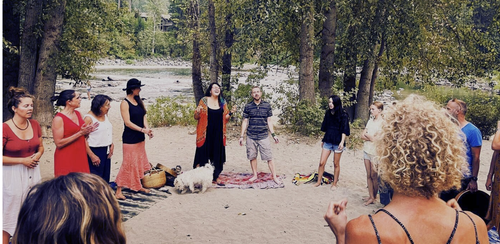
A group of people in a circle singing together at a river beach

I was sitting in a circle singing with a group of friends and family at a nearby beach, and all of a sudden I heard some unfamiliar male voices joining in. Based on the cadence of their voices and the goofy lyrics they were making up as they sang, I guessed they were from a nearby home for young adults with developmental disabilities. I guessed that the older, female voice I heard whispering occasional redirections to them was either their mom or the group home caregiver. After several songs, I heard another girl from the group home come to the boys and tell them it was time to leave. 

When the two young men ignored the girl and kept singing, I heard my mom step in and ask one of our friends to escort them up to the parking lot. 

As we were packing up our beach blanket, I asked my mom why the woman who was with the teenagers didn’t step in to help. 

“What woman?” My mom asked.

“The one who kept whispering redirections and encouragement while we sang.”

“That was me!” My mom said, to which we both laughed.

Later that evening I remarked to my husband how glad I was that our group of singers was so welcoming to the teenagers with disabilities.

“You mean those kids who were high?” Ben asked.

“No,” I insisted. “They were kids with disabilities. That’s why my mom was helping them, and then that other girl from the home came to tell them it was time to leave.”

Ben told me he was pretty sure that was just their friend and that they were just teenagers who had smoked a lot of weed. Unconvinced, I asked several friends who were there, and they not only agreed with Ben that the kids were high but also added that the two guys who sang with us were singing in an exaggerated way to be funny, but also pointed out that they still must have been enjoying singing or they wouldn’t have stayed for so many songs. 

So basically the two guys with disabilities and their caretaker were really two kids on drugs being told to settle down by my mom.

The sheer humor of this misconception not only made me laugh, but also made me glad that I don’t have friends and family who are constantly narrating everything that’s going on. I enjoy being allowed to construct my own version of what’s occurring at any given moment, even when it’s hilariously wrong.

When I really think about it, would my awareness of the quote-unquote right visual details of that story really change anything? When it really comes down to the marrow of that scenario, doesn’t the following statement apply to both perceptions? Two teenage boys experiencing a slightly altered reality were welcomed in by a group of singers on a beach, and a motherly figure accommodated their participation throughout whispered encouragement.

As I process this story further, I am left wondering whether I could reverse engineer perceptions of other stories in my life. Since our realities are really based on our own perceptions, are there scenarios I could choose to perceive differently in order to bring in a lighter perspective? Could I allow myself to laugh and have fun re-framing new and old stories alike?

This week I plan to allow my curiosity to frolic and play a bit, and I invite you, curious DoubleVision reader, to join me in a little misperception magic.

A Wedding, A Funeral, and An Old Story

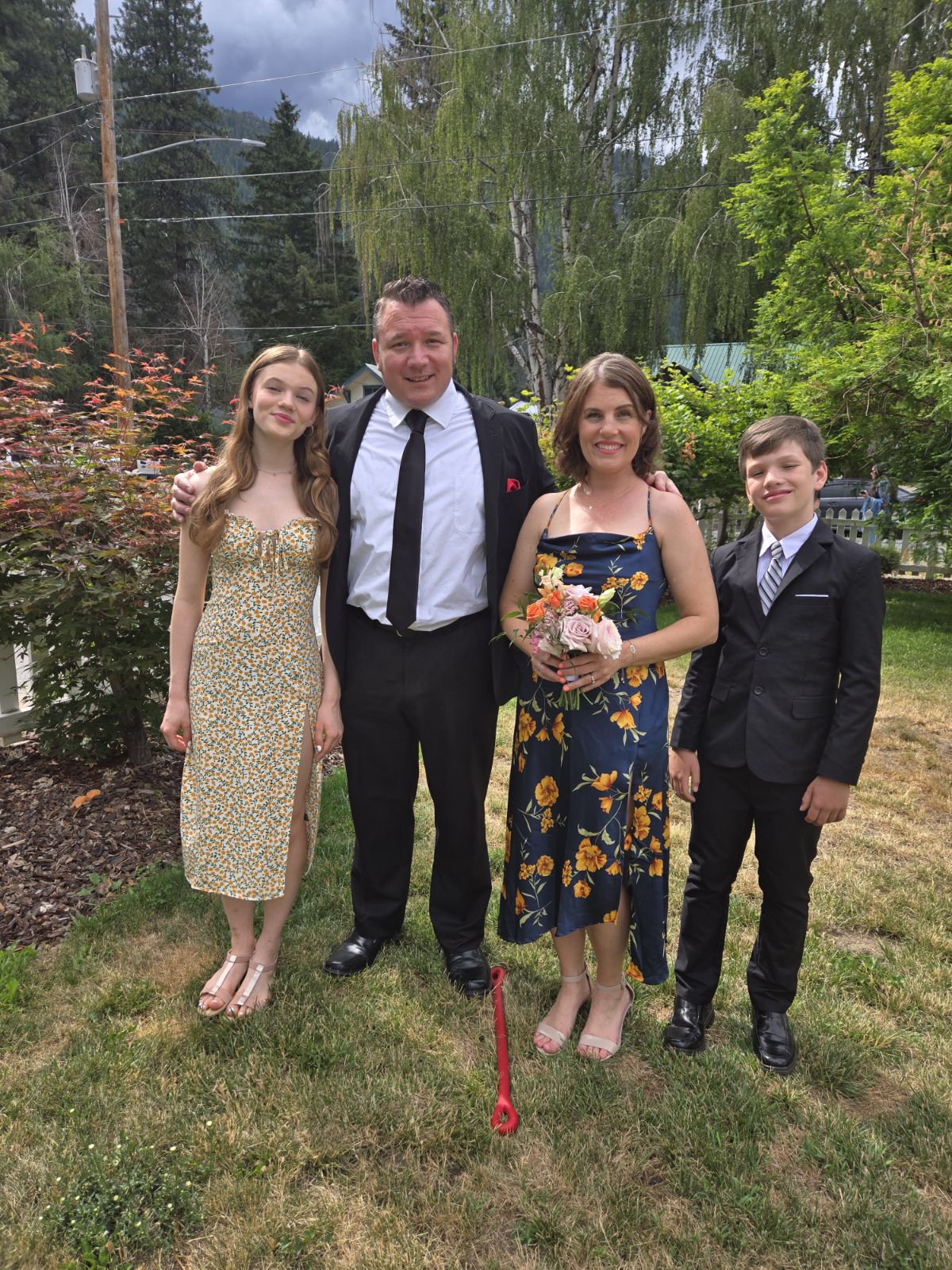
The Landgraf family en route to a wedding

The last few weeks were filled with mixed emotions as I attended the funeral of my beloved father-in-law on June 21st, and the wedding of my dearest friend the following Saturday. At both events, I felt the warmth of connecting with my community of family and friends. And at both events I noticed how my blindness impacts my sense of belonging in these community gatherings.

I was delighted to reconnect with loved ones, some I had not seen in person in many years. However, the cloudiness that has slowly settled over my central vision in recent years made it difficult for me to recognize faces as I once could. While I still had the strong desire to run up and embrace people, I found myself waiting for them to approach me. This was frustrating because it didn’t feel in alignment with my personality or sense of self. 

I also felt acutely aware of what others may be thinking/saying about me as I did my best to navigate each new environment. I longed to move with ease and fluidity as the sighted people around me seemed to mingle effortlessly. There were many times when I wanted to be able to help my grieving loved ones or my celebrating friends with all the details that go into hosting a major event. Yet, once again, my outward appearance seemed misaligned with the intentions of my inner self-  

I found myself returning to an old story that goes something like this, “I don’t belong in these spaces. My blindness makes other people uncomfortable. They want me to be different and to show up more like they do”. 

I have no way of proving if this old story is false or true. And it’s hardly that simple. This old story is rooted in stories that I have lived from a young age – times and places in which I felt wrong for showing up as I am. Experiences that taught me that the way I am is awkward, perhaps humorous, and doesn’t belong.

I used to internalize these experiences – assuming there was something wrong with me, that perhaps I was being too sensitive or imagining the awkward encounters. But then I started connecting with other people with lived experiences of disability and found so much overlap in our experiences that I could no longer categorize them as a “me thing”.

I was reminded of how much of my stories mirror those of my disabled peers on the Tuesday between the funeral and the wedding. Joy and I co-facilitated a day-long staff training for the Department of Services for the Blind summer YES2 program that included a section on exploring lived experiences of disability. Joy and I listened as staff members shared story after story of situations in which they were stigmatized, excluded, and discriminated against in both overt and covert ways. I was reminded of the complexities that accompany moving through the world in a body that is different from the majority. So many complexities that cannot be pulled apart in a single blog post. 

What I will focus on is validating that past and present stigma about blindness is real. It’s not something that myself or my peers with vision loss are creating or imagining. It happens in the workplace, in public settings such as the grocery store, and in community gatherings. And when left unprocessed, it compiles over time, like an overflowing trash bin left unemptied.

While I am a proponent of positive reframes, I want to make sure I’m leaving room for the messiness that living outside the “norm” may look like. This means leaving room for all the emotions and grief that may accompany being in spaces that are designed for and by able-bodied people. As I reflect on the ways I’ve witnessed, experienced, and participated in othering, I am certain that this is not easy work

So today, my reframe is this: The work of processing these stories is not mine to do alone. This work belongs to all of us because we all belong to a society that stigmatizes what is different or unknown. 

I don’t pretend to have a recipe for this work. I view this process as more of an art, requiring us to peer outside our own lived experiences to connect with what other humans may be feeling or needing. It’s the art of noticing our own limiting beliefs about others and challenging what we think we know. It’s less about putting ourselves in someone else’s shoes, and more about connecting with who is in front of us with openness. It’s my hope that engaging in this process will shift old stories for all of us.  

Having a Hard Human Day? Remember the Birth Date Line

Image description: a sunset over a landscape with a complex network of reflective waterways. In the background, dark hills or rise against a gradient sky, transitioning from golden yellow to blue (Photo by Jeremy Bishop)

In recognition of Mental Health month this May, Jenelle and I helped facilitate “Stronger Together: Our Stories Matter”, a conference in Washington state for teens with sight loss and their families. One of my favorite parts of the weekend was the activities led by the Northwest Association of Blind Athletes (NWABA). I’ve always avoided Zumba workouts, so I was delighted to find that Zumba dance classes are actually fun and easy to follow with accessible instructions. I was also surprised by how sore my psoas muscles were the following day after some seemingly simple salsa combos. High knee core twist anyone?

They also led the youth in a game of bocce ball. My husband’s family is Italian, so I’m very familiar with the game and wondered how the players would aim for the small pallina ball, much less know which team’s ball was closest to it. NWABA’s modifications definitely reinforced my belief that humans are inherently ingenious when it comes to adaptations.

The game included a beeping pallina and a tactile map of where each ball was located in relation to the pallina. After each turn, an Orientation and Mobility Instructor could rearrange the tactile pieces in order to mimic the arrangement for any players who needed it. Bravo, NWABA!

One activity they led on the very first evening of the conference, however, spoke to me on a deeper level.

Our task was to arrange ourselves chronologically by birthday (not year, thankfully!) from one end of the hotel banquet room to the other. With over 50 participants plus several interpreters for our parents who were mono-lingual Spanish speakers, this was no small charge.

As we began to meander around the room, I noticed a young college student who was new to blindness standing still, so I asked if she wanted an arm. Ironically, we found that her birthday was right after mine, so by taking my left arm, she was already in the exact place she needed to be in the line. Once we arrived to our proper places, she continued to hold onto my arm and shared a bit of her story, which for confidentiality purposes will remain in the banquet room. I will say, however, that the experience of grief is a shared one, and vulnerability is a gift we give to one another.

When we were all arranged in a line, the person with the very first birthday in January said their birthday and so on until we reached December. I could sense the pride in the room as every single person was in proper birthday order. As each person named their birthday, rippling down the line like an ocean wave on a calm day, another wave came over me. I had trouble naming it at first. Wonder? Awe? Connection? The thought that all of the people in the room were affected by vision loss in some way rolled over me, causing me to hold my breath for a brief moment.

There were youth and some staff with vision loss, siblings, and parents, and everyone was there to support one another. We were all at different places in our journeys. Some had been born with sight loss. Others had recently lost theirs. Some sudden. Some expected. All connected.

As I reflect on this image, it occurs to me that there is a birthday line out there for all of us humans walking this journey we call life.

Have you been betrayed by a loved one? There is a birthday line for you. Are you struggling with regret? There is a birthday line for you. Do you suffer from waves of emotions that sometimes threaten to pull you under? Yes, you too have a birthday line.

A birthday line consists of all of the many humans on this planet who are, at this very moment, sharing in the struggle that you are in. The details of that struggle may vary , and the exact way our brains and bodies process the experience may differ, but the very real emotions that coincide with being human are alike. Disappointment. Anger.. Confusion. Wonder. Contemplation. Joy. And a million nuances in between.

So, DoubleVision friends, the next time you feel alone in your shame or blame or pain, picture the birthday line and feel the connection that ripples through shared humanity. No, it won’t solve your struggle, but there is a softening that occurs when we remember our common humanity.